Tropical Flamingo Line Art: A Designer's Review
As a designer who spends more time staring at stitch simulations than most people care to admit, I am always skeptical of "line art" claims in the digital marketplace. Too often, what is marketed as clean, minimal line work turns out to be a jagged mess of auto-digitized nodes that will snap threads the moment your machine hits high speed. However, after pulling the Tropical Flamingo Line Art with Flowers into my workspace for a potential client project, I found myself pleasantly surprised by its potential for real-world application. This isn't just a pretty picture for a screen; it is a viable asset for serious embroidery projects, provided you understand how to handle it.
First Impressions and Visual Personality
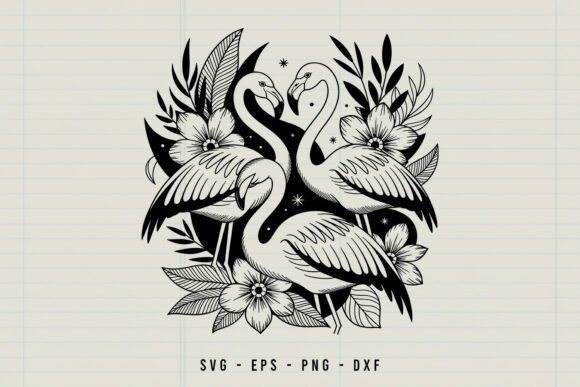
The moment I opened the ZIP file, the organization was refreshing. You get one SVG, one PNG at 300 DPI, and one EPS file. For an embroidery designer, the SVG is the golden ticket here. It allows us to import the vector paths directly into our digitizing software to create a custom machine embroidery design or to use as a precise template for appliqué. The aesthetic is undeniably tropical but restrained. Unlike those overly busy wildlife clipart options that try to cram every leaf and feather detail into a small space, this design relies on negative space and confident curves.
The mood is breezy and exotic without screaming "tourist trap." The flamingo stands tall, integrated seamlessly with floral elements that frame rather than overwhelm the bird. This balance is crucial. In my experience, designs that are too dense tend to pucker lightweight fabrics, while those that are too sparse look unfinished on heavy materials. This illustration strikes a middle ground that suggests versatility. It feels like a design that belongs on a boutique tote bag or a high-end resort wear collection rather than a cheap novelty item.
Real-World Application: The Resort Tote Scenario
To truly test the viability of this graphic, I envisioned a specific real-life scenario: a custom order for a local beach boutique needing a run of fifty embroidered canvas tote bags. The client wanted something that felt handmade but professional, suitable for carrying wet swimsuits and sunscreen without looking childish. The Tropical Flamingo Line Art with Flowers fit this brief perfectly.
Because the source file is a crisp vector within the Illustrations category, scaling it to fit a standard 5x7 hoop was effortless. There was no pixelation or loss of detail when resizing, which is a common headache with raster-only Graphics. If I were digitizing this from scratch based on the SVG, I would likely opt for a combination of running stitches for the fine outlines of the flowers and a light satin stitch for the flamingo's body to give it just enough weight to pop against the canvas texture. The open nature of the line art means the fabric texture remains visible, which adds a premium, breathable feel to the finished product.
For an Etsy seller or small shop owner, this kind of adaptability is gold. You aren't stuck with one look. On a dark navy sweatshirt, you could use metallic gold thread for the lines to create a luxurious night-time vibe. On a white baby onesie, soft pastels would make it a perfect baby embroidery gift for a summer arrival. The design doesn't fight the fabric; it collaborates with it.
Navigating Fabric Challenges and Stitch Density
While the design is strong, practical judgment dictates we discuss where it might struggle. Line art can be deceptive. Those elegant, thin curves in the original SVG need careful translation into thread. If you attempt to stitch this on a highly textured fabric like a chunky knit sweater or a looped terry cloth towel without proper stabilization, the fine details of the flowers could get lost or swallowed by the pile.
Furthermore, if you are planning to use this on stretchy performance fabrics for athletic wear, you must be wary of stitch density. Even though the design looks airy, if your digitizing settings pull too tight, the fabric will distort. I always recommend testing the design on scrap fabric first. Check your thread color contrast aggressively; a low-contrast thread on a similar-colored fabric will render the intricate line work invisible from three feet away. For dark fabrics, ensure your underlay is sufficient to prevent the background color from peeking through the gaps in the floral elements.
Curved surfaces present another hurdle. If you intend to put this on a cap, the center of the design needs to be simplified. The detailed interaction between the flamingo's legs and the surrounding foliage might cause registration issues on the steep curve of a baseball hat. In such cases, I would advise isolating just the flamingo head or simplifying the flower cluster to ensure clarity.
Commercial Value and Brand Consistency
For creative entrepreneurs selling digital embroidery files or physical goods, consistency is key to building trust. This design offers a cohesive visual language that can be easily adapted across a product line. Imagine using the same flamingo motif on a kitchen towel, a pillow cover, and an apron. The consistent style reinforces brand recognition. Customers appreciate when a handmade product looks intentional rather than haphazardly chosen from a generic clipart bin.
The inclusion of the EPS and high-resolution PNG also opens doors beyond the hoop. You can use these assets to create printable mockups for your online store before you even stitch a single thread. This is invaluable for craft business owners who need to populate their Shopify or Etsy listings quickly. The 300 DPI PNG ensures that your marketing materials look sharp, increasing buyer engagement and perceived value.
Practical Notes for the Serious Maker
Before you commit this design to a client's garment, keep these technical checkpoints in mind:
- Verify Licensing: Always double-check the specific license terms included in the download. While the files are provided for use, confirming whether they allow for unlimited commercial sales of finished items or if there are restrictions on reselling the digital file itself is essential for legal safety.
- Stabilizer Selection: For line art, a cut-away stabilizer is often safer than tear-away, especially on garments that will undergo frequent washing. You want those fine flower stems to remain crisp years later.
- Thread Choice: Consider using a slightly thicker thread weight (like Rayon 40) for the main outlines to ensure durability, while potentially using a finer thread (Polyester 60) for the delicate inner details if your machine supports it.
- Hooping Strategy: Ensure your hoop size accommodates the full spread of the flowers. Cramping the design near the edge of the hoop can lead to framing marks or incomplete stitching.
- Mockup Testing: Run a black-and-white test stitch-out. If the design loses its definition in monochrome, it lacks the necessary contrast to work well in color on varied backgrounds.
In conclusion, the Tropical Flamingo Line Art with Flowers is a robust resource for the modern embroiderer. It bridges the gap between digital aesthetics and tactile reality. It requires a thoughtful approach to digitizing and material selection, but for those willing to put in the prep work, it yields a custom apparel or home decor item that feels bespoke and professionally executed. It is not just a file; it is a foundation for a profitable and beautiful embroidery project.